



Flipper One Hacking Tool: Pocket Linux PC for Security Pros
Firmware analysis published last week reveals that the Flipper One hacking tool is a pocketable Debian Linux workstation aimed at security professionals and network engineers a fundamentally different product category from the radio gadget that made Flipper famous. That distinction matters because the audience, the use cases, and the commercial risks are all different. So is the likelihood it ever ships.
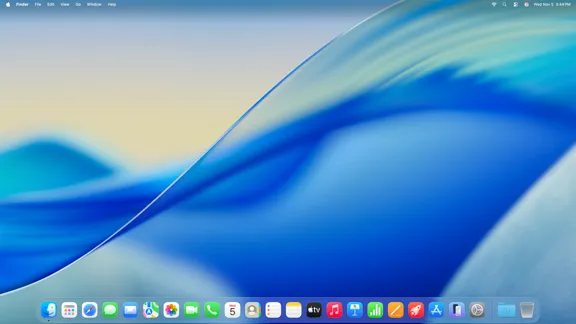
XDA dug into the public firmware repositories on March 16 and found the device booting Debian 13 (Trixie) for arm64, launching straight into KDE Plasma over Wayland with SDDM auto-login a full graphical Linux desktop, running on something designed to fit in a jacket pocket. That finding, combined with prototype PCB photos shared by the CEO in February, paints a picture of a device that has almost nothing in common with its predecessor beyond the name. What it shares with its predecessor is the uncertainty: there is still no official release date, and the CEO has publicly questioned whether the project makes economic sense.
The Flipper Zero raised $4.8 million on Kickstarter in 2020 and built a community of over half a million users by doing something simpler and shrewder: letting complete beginners read, copy, and emulate RFID cards, NFC tags, and sub-GHz remotes through a cartoon dolphin interface, for $199 (XDA, last month; ZDNET, yesterday). The One is a different animal entirely.
Flipper One vs Flipper Zero: what changed and what it costs
The Zero's value proposition was deliberate accessibility. Its built-in support for RFID, NFC, infrared, and sub-GHz radio all controlled through a simplified interface built for beginners made hardware hacking approachable to a mainstream hobbyist audience (ZDNET, yesterday). The $35 Wi-Fi expansion board sold separately was not a pentesting tool; Flipper's own documentation describes it as a debugging platform, with network analysis and penetration testing features absent from the default firmware.
The Zero also ran on custom open-source firmware that spawned a thriving ecosystem of third-party scripts and alternative firmware builds a community layer that made the hardware extensible without requiring any Linux knowledge (ZDNET, yesterday).
The One's current firmware and prototype evidence show a different set of priorities entirely. The key shifts, based on what's been confirmed:
- Removed: NFC, RFID, sub-GHz radio
- Added: Native Wi-Fi and Bluetooth, confirmed via U-Boot bootloader strings and dedicated GPIO pins in the device tree (XDA, last week)
- OS: Debian 13 in the current dev image, replacing custom firmware and its curated tool library
- Form factor: Grown from something the size of a small toy to a device closer in size to a chunky smartphone, with a 2.39-inch 256x144 color display replacing the Zero's 1.4-inch monochrome screen (ZDNET, yesterday)
The regulatory backdrop is relevant context. The Zero's radio capabilities triggered import bans in Canada and Brazil, got it pulled from Amazon, and reportedly led to airport seizures (ZDNET, yesterday). Flipper has not attributed the One's redesign to those pressures, and the removed features may reflect a technical vision rather than regulatory caution. Both explanations are plausible; neither is confirmed.
The Zero was a beginner-friendly radio multitool. The One is a Linux field computer. Those aren't points on a spectrum they're different products for different people.
What the hardware and firmware evidence actually confirms
The processing architecture alone signals the category change. The Zero ran on a single STM32 microcontroller. The One uses a dual-processor design: a Rockchip RK3576 handles Linux, while a Raspberry Pi RP2350 manages lower-level tasks like the display, buttons, and LEDs (XDA, last week).
The RK3576 is an octa-core chip with a big.LITTLE design four Cortex-A72 big cores and four Cortex-A53 little cores. According to the device tree in the firmware, the big cores scale up to 2.2 GHz and the little cores run at roughly 2.0 GHz, which is above Rockchip's official 1.8 GHz spec for the little cluster (XDA, last week). ZDNET references slightly different chip designations (RK3567 + RP2040); XDA's account cites device tree analysis of actual disk images, which makes it the more detailed source on internal specs.
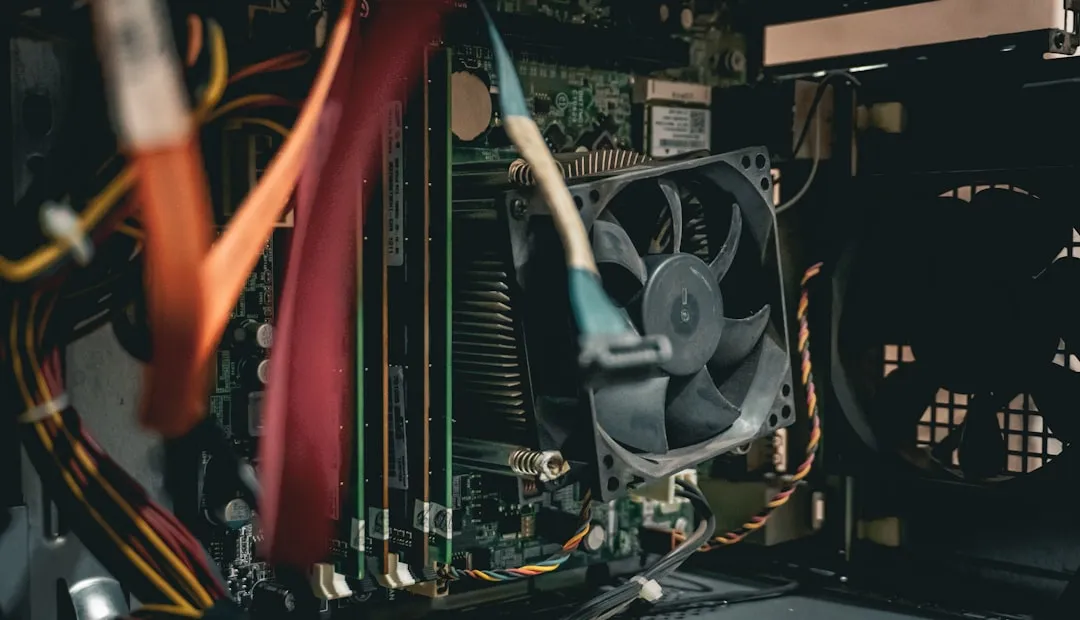
Prototype PCB photos shared by the CEO confirmed dual Ethernet ports, dual USB-C ports, USB-A, and a 24-pin GPIO interface (XDA, last month). One USB-C port supports DisplayPort output. An M.2 Key-B slot is present, most likely for cellular modems rather than storage (ZDNET, yesterday).
Those specs point to concrete use cases the Zero couldn't address:
- Dual Ethernet enables on-device packet routing or tap-and-capture setups
- GPIO supports embedded hardware testing and wired device access
- DisplayPort output means a field technician could plug into a monitor for a full workstation session
- Cellular via M.2 would make the device genuinely autonomous in the field
One detail worth noting: the current development firmware boots from an SD card, and the device ships with two kernels Linux 7.0.0-rc3 on the mainline branch and a 6.1.141 BSP kernel as a fallback (XDA, last week). The boot menu includes an entry labeled "USB-C Router," a small but concrete signal of intended networking use. The Debian 13 and KDE Plasma environment visible in the public dev image reflects where development stands now, not a retail promise.
On the software side, Debian is the development platform, not necessarily what ships. A September 2025 concept document describes a custom immutable OS modeled on how SteamOS handles updates with A/B partitions for atomic rollbacks and sandboxed user apps via Flatpak, AppImage, or Snap (XDA, last week). The original concept was marketed as "powered by Kali Linux" and ran on different hardware entirely; the hardware has since switched from an NXP i.MX6 to the RK3576, and the OS direction has changed at least twice. The firmware is incomplete, and many details are subject to change.
Who this is actually for and why that makes launch harder
Strip away the Flipper branding and the hardware description maps to a specific type of user: the network engineer who wants a pocketable device for console access and packet capture in the field; the security researcher who needs a portable Linux environment with hardware I/O without lugging a laptop; the embedded developer who wants GPIO access and display output without setting up a bench rig.
These are not Flipper Zero's core users. They're a smaller, more technically demanding audience that will apply higher scrutiny to price, software polish, and long-term support.
That audience shift matters for the business case. The Zero worked at $199 because it had broad appeal and relatively low component costs for what it delivered. The One competes in a different bracket against mini PCs, single-board computers like the Raspberry Pi 5, and purpose-built pentest hardware. Memory costs are squeezing that entire segment: driven largely by manufacturers prioritizing high-bandwidth memory for AI data centers, the DRAM crisis has pushed the 16GB Raspberry Pi 5 to $205 after two price increases in three months (XDA, last month).
Pavel Zhovner, Flipper Devices CEO and co-creator of the Zero, said publicly after the first prototype PCBs arrived that the project may be economically unviable. After reviewing the bill of materials memory costs in particular he concluded the business model doesn't hold up. According to a machine-translated version of his Telegram post, Zhovner described cutting losses as the "only rational decision" (XDA, last month). Flipper has made no official announcement about the project's status.
The official line from the development team is that the device is "still experimental, with no official release date" (ZDNET, yesterday). ZDNET reads indirect signals as pointing toward a possible summer window; that is speculation about clues, not a company commitment. XDA's assessment is more measured: the project has been "almost ready" for years, and may never actually launch.
Watch it, don't wait on it
The Flipper One, as firmware and prototype evidence currently describes it, is a serious attempt to build something genuinely uncommon: a pocket-sized Linux PC with the I/O density of a network lab tool dual Ethernet, GPIO, DisplayPort output, native wireless, and modular cellular expansion running on hardware clocked at up to 2.2 GHz (XDA, last week). For a network engineer or security researcher who needs that specific combination of capabilities in a jacket-pocket form factor, the proposition is genuinely interesting.
The firmware is a dev build booting from SD card. The OS direction has changed at least twice. The CEO has questioned the math out loud. There is no release date (XDA, last month). Treat it as a project worth following, not a product worth anticipating.
The deeper question is what Flipper is trying to become. The Zero succeeded by making a technical hobby accessible to a large audience at a price that worked. The One, if it ships, will ask a smaller and more demanding audience to pay more for something considerably more capable. Whether that trade is commercially viable is the question Zhovner himself isn't sure about. As of this week, with no release date and no official project update, the answer remains open.




Comments
Be the first, drop a comment!